
LogoPLATE
NSF/ANSI 51/Food Equipment MaterialsFDA 21 CFR/Food Contact ComplianceUSDA/Accepted for UseISO 2177/Coating ThicknessASTM B733/Electroless NickelAMS 2404/Plating SpecificationFSMA/Preventive ControlsHACCP/Verified SupplierNSF/ANSI 51/Food Equipment MaterialsFDA 21 CFR/Food Contact ComplianceUSDA/Accepted for UseISO 2177/Coating ThicknessASTM B733/Electroless NickelAMS 2404/Plating SpecificationFSMA/Preventive ControlsHACCP/Verified SupplierNSF/ANSI 51/Food Equipment MaterialsFDA 21 CFR/Food Contact ComplianceUSDA/Accepted for UseISO 2177/Coating ThicknessASTM B733/Electroless NickelAMS 2404/Plating SpecificationFSMA/Preventive ControlsHACCP/Verified Supplier

Electroplating engineered for what people eat and drink.

Industrial electroplating bath with metal components being lowered into solution under amber halogen lighting
Industrial Plating · Food Contact Certified
Food-Grade
Electroplating.

Zinc, nickel, and tin electrodeposited onto stainless mixing bowls, brewery tanks, and conveyor components — built to survive caustic washdowns and FDA audits without flaking a single micron.

0.0002"

Min Mil Tolerance

XRF Verified

48 hr

Weekend Turnaround

Shutdown-ready

100%

FDA Documentation

Per batch

Scroll
The Plating Line

Six stages.

Nothing hidden.

Most platers won't show you their chemistry. We publish ours because precision isn't a trade secret — it's a standard.
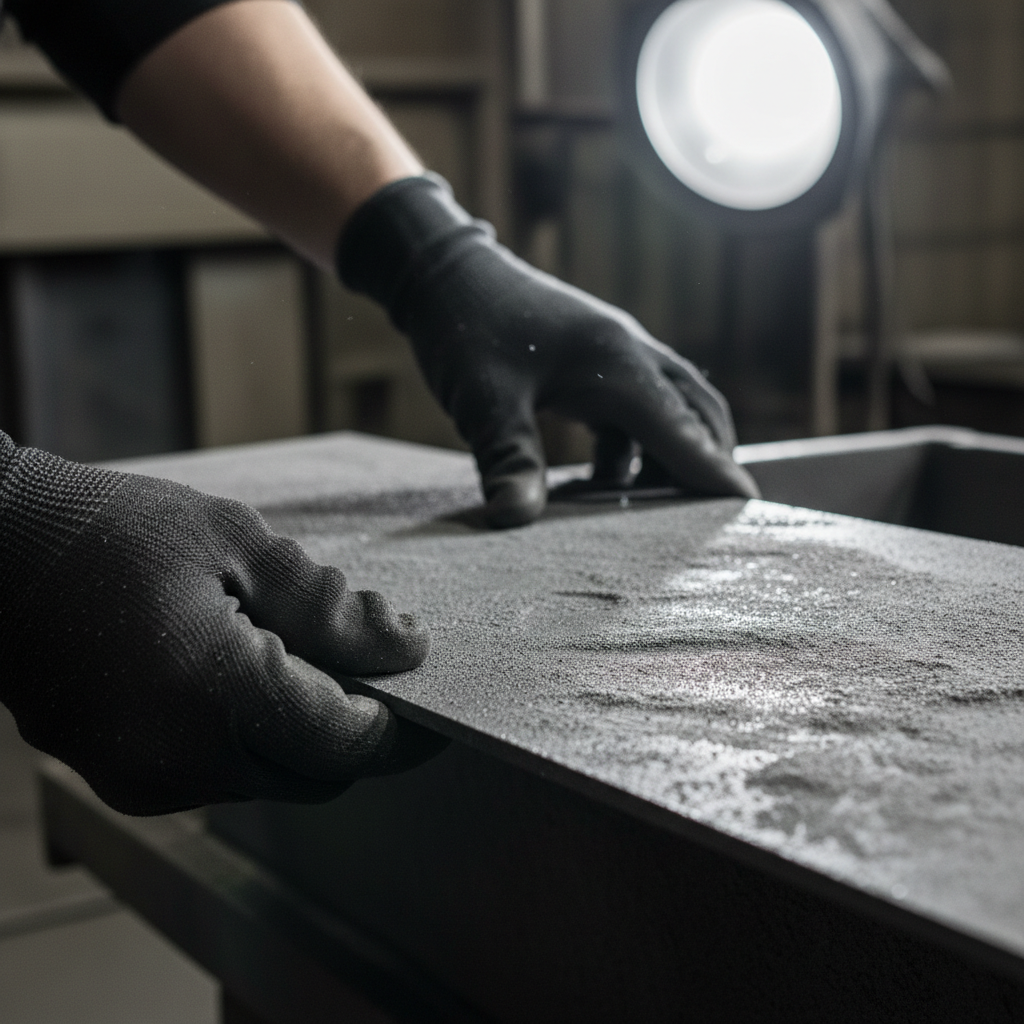
Close-up of gloved hands handling a blasted metal surface with visible matte texture under industrial lighting
STAGE 01
01 / 06

Surface Preparation & Abrasive Blasting

The foundation is the substrate.

Every part enters the line stripped to bare metal. We use 80-grit aluminum oxide at 60 psi to achieve a surface profile of 1.5–2.5 mils Ra — rough enough for mechanical adhesion, smooth enough that the plate builds uniformly. Grease, oxide scale, and heat tint are gone before the part touches chemistry.

Al₂O₃ 80-grit

Blast Media

55–65 psi

Pressure

1.5–2.5 mil

Surface Ra

< 4 hr to bath

Dwell Time

Metal part being lowered into a steaming alkaline cleaning bath with amber-tinted industrial lighting reflecting off the surface
STAGE 02
02 / 06

Alkaline Cleaning & Activation

Chemistry before chemistry.

Parts soak in a 10% sodium hydroxide bath at 160°F for 8 minutes, followed by a HCl acid dip at 20% concentration for 45 seconds. The activation etch opens the grain structure, giving ions a lattice to bond into. We rinse with deionized water at each stage — no tap water, no mineral contamination.
NaOH 10% @ 160°F

Cleaner Bath

HCl 20% @ 45 sec

Acid Activation

DI < 1 μS/cm

Rinse Water

< 0.5 residual

pH Target

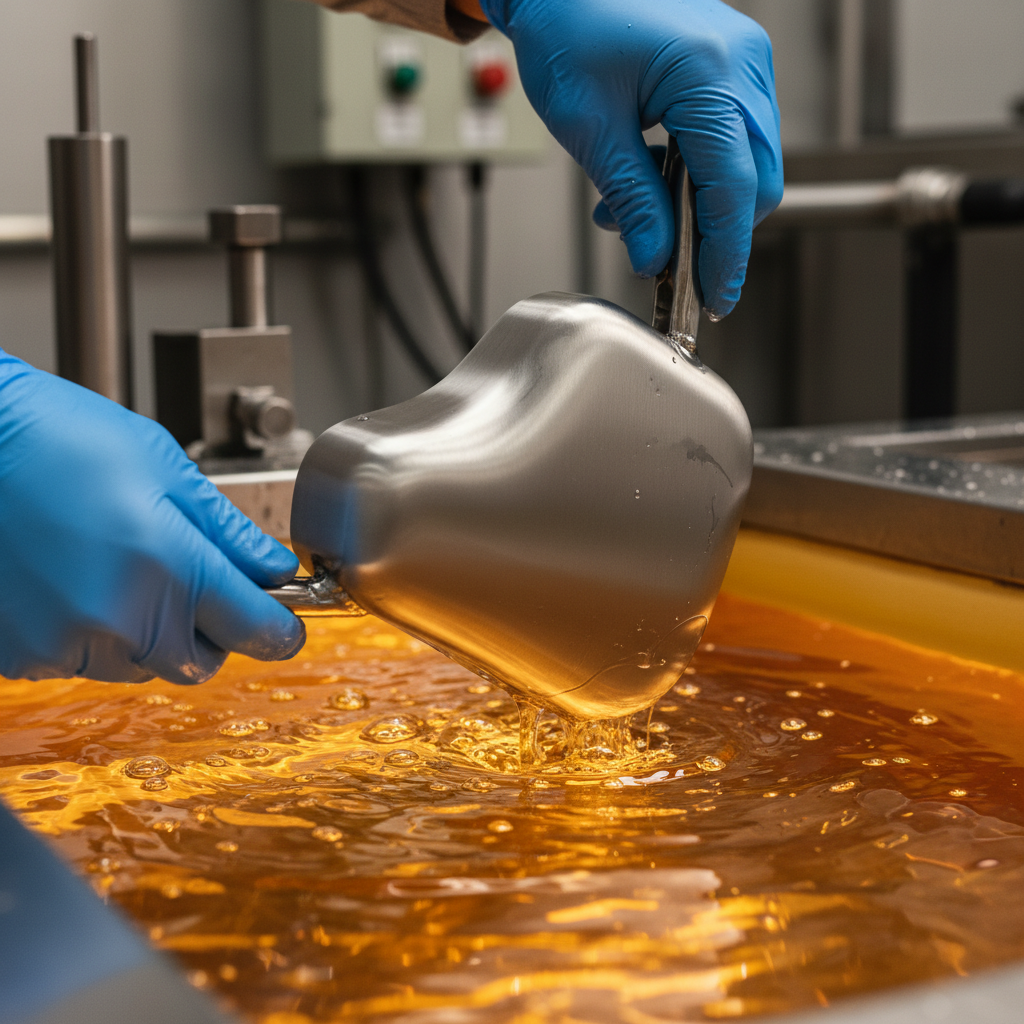
Gloved hands lowering a stainless steel component into a plating bath with amber glow reflecting off the liquid surface
STAGE 03
03 / 06

Electroplating Bath Immersion

Where ions become metal.

The part enters the plating bath as a cathode. Current density is set between 20–40 ASF depending on geometry. For food-contact zinc, we run a sulfate bath at pH 4.5–5.5, 75°F, with brightener additions controlled to ±0.5 ml/L. Nickel runs at pH 3.8–4.4, 140°F. Every bath has a dedicated rectifier — no shared current, no cross-contamination.

4.5–5.5

Zinc Bath pH

140°F / pH 3.8–4.4

Nickel Bath

20–40 ASF

Current Density

±0.5 ml/L

Brightener Control

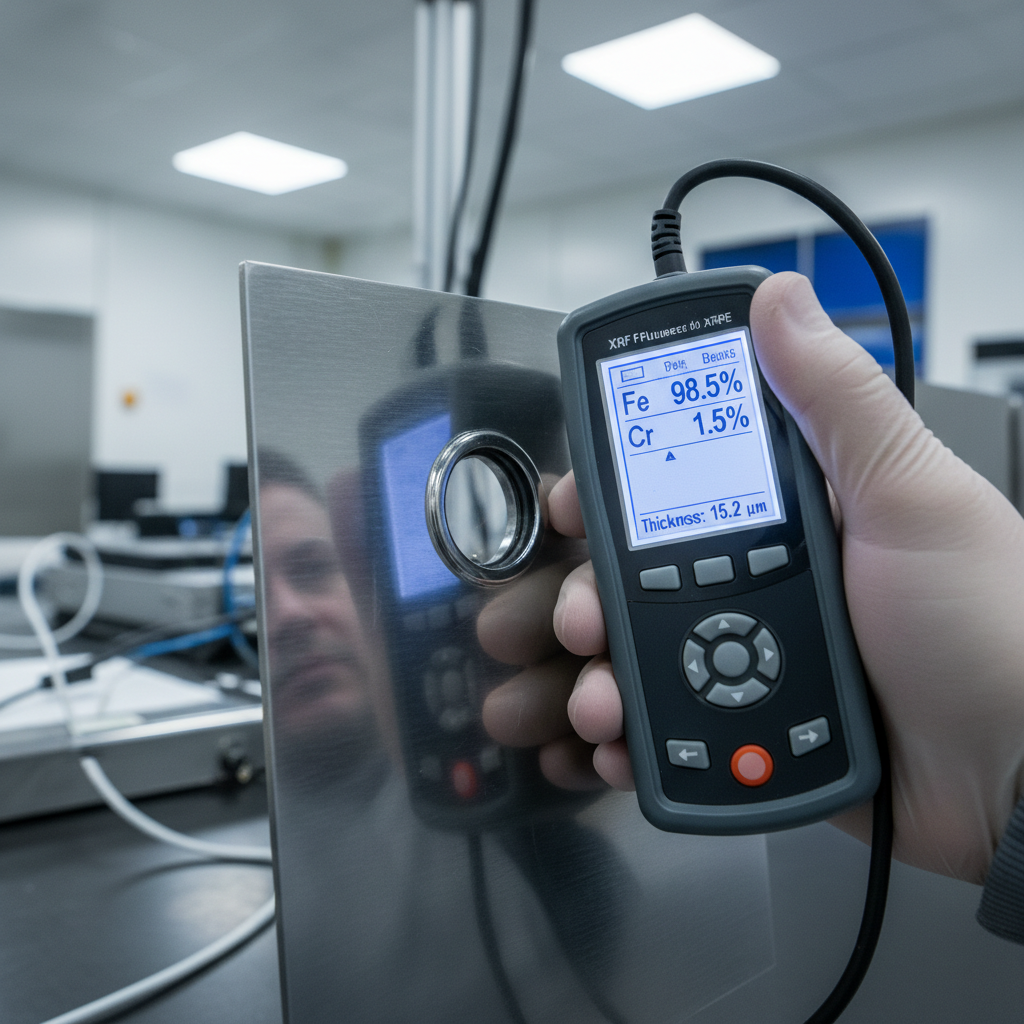
Close-up of a freshly passivated metal surface showing mirror-bright amber-tinted reflection under halogen lighting
STAGE 04
04 / 06

Post-Plate Passivation

Lock the barrier in.

Zinc parts receive a trivalent chromate passivation — not hexavalent, which is banned in food-contact applications. The conversion coating adds 0.1–0.3 μm of chromate film that extends corrosion resistance from 96 to 500+ hours in neutral salt spray. Nickel parts receive a 0.2% phosphoric acid brightening rinse, not a passivation — the nickel is already the barrier.
Trivalent Cr(III)

Passivation Type

0.1–0.3 μm

Film Thickness

500+ hr NSS

Salt Spray Rating

None / RoHS OK

Hex-Cr Content

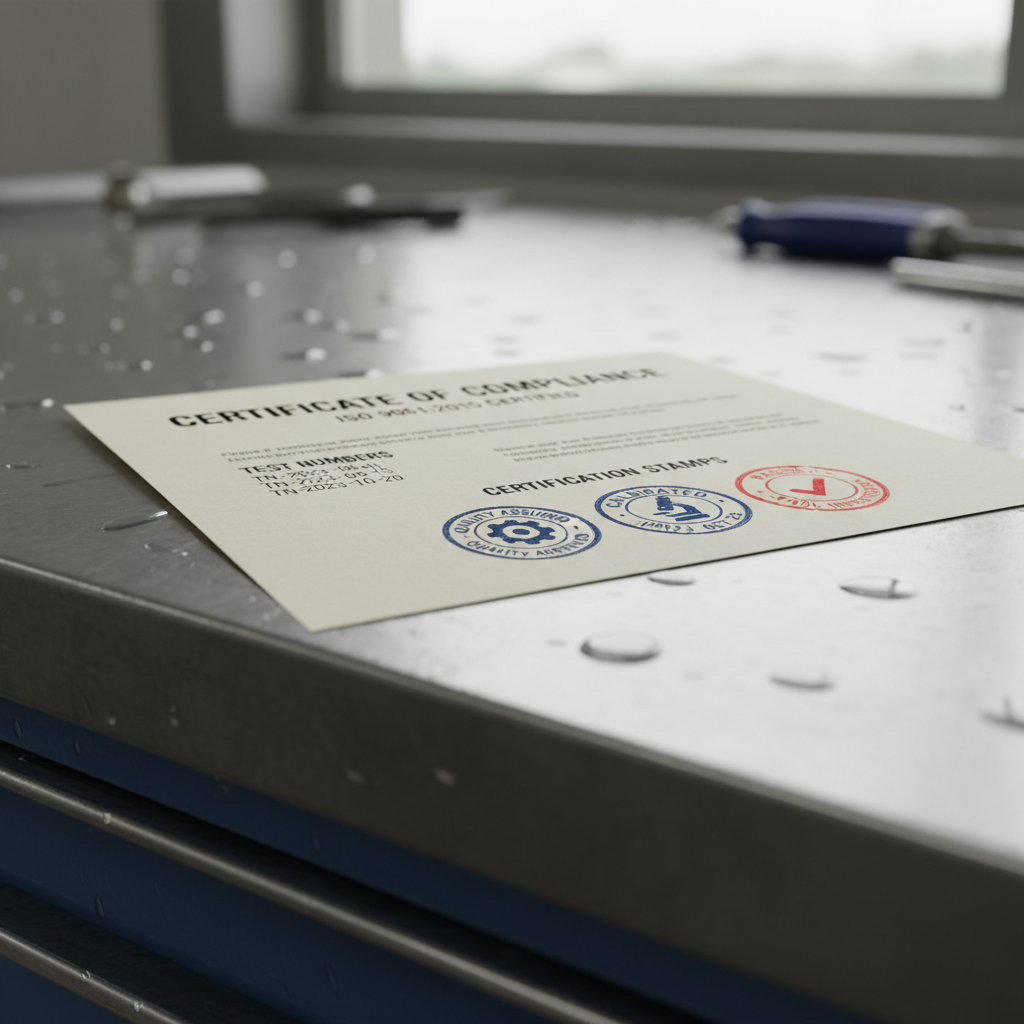
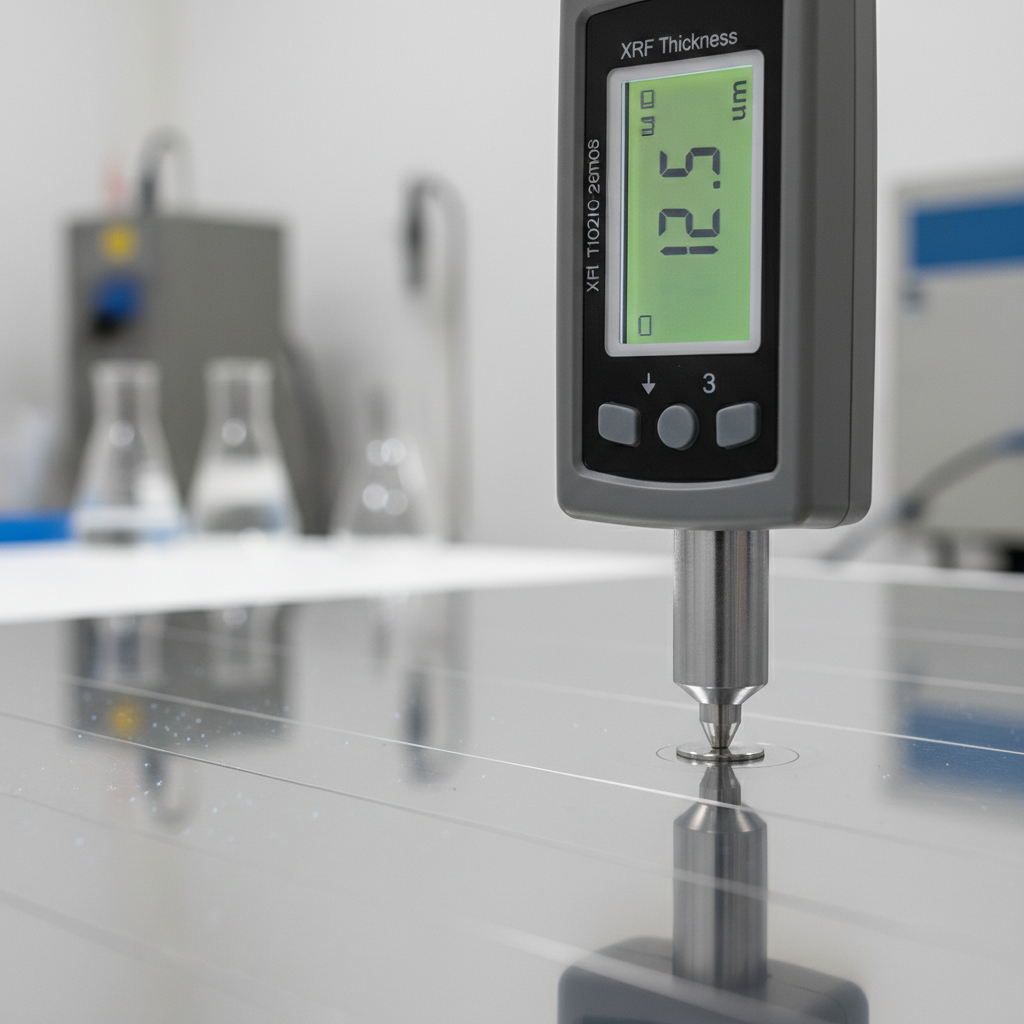
Technician holding XRF gauge against a plated metal surface with digital readout visible, precision measurement in industrial setting
STAGE 05
05 / 06

XRF Thickness Testing

Numbers, not promises.

Every part gets a minimum of five XRF readings per surface zone. We use a Fischer XDV-SDD with a 1 mm collimator spot, calibrated daily against NIST-traceable standards. Results are logged in real time to a batch record. If any reading falls outside ±10% of spec, the part goes back. No exceptions, no "close enough."
Fischer XDV-SDD

Instrument

1.0 mm collimator

Spot Size

NIST-traceable

Cal Standard

5 min per zone

Readings/Part

Printed compliance certificate with visible test numbers and certification stamps on a metal workshop table
STAGE 06
06 / 06

Compliance Documentation

The paper trail survives the audit.

Every batch ships with a Certificate of Compliance listing substrate alloy, plating type, nominal thickness, XRF readings by zone, bath chemistry log, passivation type, and applicable standards. The document is signed, stamped, and stored for seven years. Your QA manager can hand it to an FDA auditor without opening a file drawer.

7 years

Document Retention

NSF 51, FDA 21 CFR

Standards Listed

QC Manager + Stamp

Signature

PDF + hard copy

Format

Engineering Reference

Plating Compatibility

Chart.

Bookmark this. Share it with your team. Filter by substrate, plating type, or FDA compliance tier. No login required.

Plating:
FDA Tier:
Substrate:
SubstratePlating TypeThicknessFDA TierApplicationsNotes
304 StainlessElectroless Nickel0.0002–0.0005"Tier 1Mixing bowls, tank interiors, valve bodiesDirect food contact. NSF 51 certified.
316L StainlessElectroless Nickel0.0003–0.0008"Tier 1Brewery fermentation vessels, CIP spray ballsChloride-resistant. Preferred for sour ales.
Carbon SteelZinc + Trivalent Passivation0.0003–0.0005"Tier 2Conveyor frames, structural rack systemsNot direct food contact. 500 hr NSS.
Carbon SteelElectroless Nickel0.0005–0.001"Tier 1Bakery oven racks, conveyor slatsRequires Ni strike on steel. FDA 21 CFR compliant.
Aluminum 6061Electroless Nickel0.0002–0.0004"Tier 1Bottling line guide rails, filler headsZincate pretreatment required for adhesion.
Aluminum 5052Tin0.0001–0.0003"Tier 1Can-line tooling, food-contact fixturesSoft tin. Not for abrasive environments.
Cast IronZinc + Trivalent Passivation0.0005–0.001"Tier 2Pump housings, valve bodies (non-contact)Porosity masking required pre-plate.
17-4 PH StainlessElectroless Nickel0.0003–0.0006"Tier 1Precision filling nozzles, metering valvesHardness to 70 HRC equivalent with HT.
Copper AlloyTin0.0002–0.0004"Tier 1Beverage fittings, heat exchanger platesFDA 21 CFR 175.300. Prevents Cu leach.
Titanium Grade 2Electroless Nickel0.0002–0.0003"Tier 1Pharmaceutical processing, high-purity linesRequires specialized activation etch.

Tier 1 = direct food contact approved. Tier 2 = incidental contact, not immersed. Tier 3 = non-contact structural. All thicknesses are nominal; actual specification per your part geometry and service environment. Download the full spec sheet for complete chemistry and adhesion data.

Quality Data

Numbers,

not promises.

The XRF report below is from an actual production batch — a 304 stainless mixing bowl plated with electroless nickel for a commercial bakery in Portland, OR. Feb 12, 2026.
0.0%

First-pass acceptance rate

FY 2025 YTD

0+

Salt spray hours

Neutral salt spray NSS

0yr

Document retention

Full batch records

0hr

Max turnaround

Shutdown weekend

XRF Batch Report

Batch #PLT-2026-0212-B047

02/12/2026

SUBSTRATE

304 SS Mixing Bowl

PLATING

Electroless Nickel

SPEC

NSF/ANSI 51

Zone A — Interior Base

NOM: 0.0004"

0.00041"

+2.5%

PASS

Zone B — Side Wall Upper

NOM: 0.0004"

0.00039"

-2.5%

PASS

Zone C — Side Wall Lower

NOM: 0.0004"

0.00042"

+5.0%

PASS

Zone D — Rim Edge

NOM: 0.0004"

0.00038"

-5.0%

PASS

Zone E — Weld Seam

NOM: 0.0004"

0.00040"

0.0%

PASS
ALL READINGS WITHIN ±10% TOLERANCE
Fischer XDV-SDD
XRF thickness gauge being applied to a freshly plated metal surface showing digital readout in a quality control setting

LIVE BATH PARAMETERS

280 g/L

Nickel Sulfate

Main salt

50 g/L

Nickel Chloride

Conductivity

40 g/L

Boric Acid

pH buffer

140°F

Bath Temp

60°C nominal

3.8–4.4

pH Range

Checked q2h

30 ASF

Current Density

Nominal flat

Technical Document

The spec sheet

earns the email.

We've given you the process walkthrough, the bath chemistry, and the XRF data. The spec sheet is the next layer — a 14-page technical document your engineering team can use to evaluate, specify, and approve plating for any food-contact application.

Complete bath chemistry ratios for Zn, Ni, and Sn

Substrate × plating adhesion test data

XRF tolerance specifications by geometry type

FDA 21 CFR and NSF 51 compliance matrices

Passivation chemistry and salt spray results

Turnaround SLA by part complexity and volume

"We've had spec sheets from six plating shops over the years. Plate's is the only one we didn't have to ask follow-up questions about."

DEREK WALSH

Plant Engineer · Cascade Bottling, Portland OR

Download Spec Sheet — Free

No spam. One email with the PDF attached. That's it.